Published on
01/31/2024Throughout human history, the brain has been the most complex and fascinating biological structure. It not only governs our thoughts, feelings, and behaviors but also nurtures countless innovations and arts.
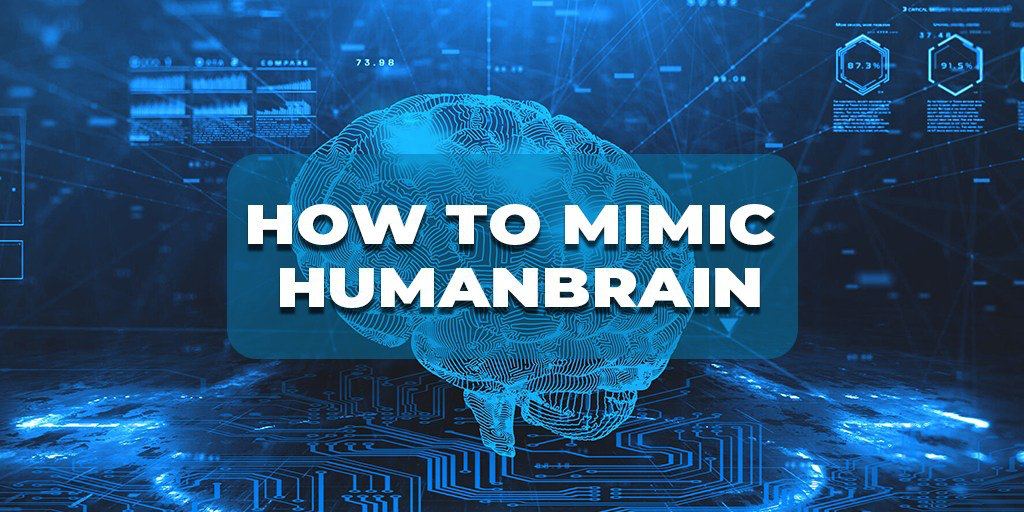
Can we simulate such a mysterious and marvelous organ? The answer is, to some extent, yes. This is precisely what the WorldBrain project is diligently exploring. Next, we will analyze how to simulate a biologically inspired brain network starting from the basic neurons.
Basic Structure of the Brain
Firstly, let's learn the fundamental components of the brain.
The human brain has approximately a hundred billion neurons, which communicate with each other through nearly ten trillion synapses, forming an extremely complex network structure known as the neural network.
This network comprises not only neurons but also auxiliary cells and immune cells far exceeding the number of neurons. They work together, operating this intricate organ.
The brain's structure goes beyond individual neurons and their connections. In reality, the brain consists of multiple relatively independent brain regions, interconnected internally to form a vast information communication network. This coordination allows us to think, feel, memorize, and perform various complex tasks.
How WorldBrain Simulates this Marvelous Brain
WorldBrain starts from the basic neural cells and delves into how to simulate the interactions of these neurons using advanced technology, and explores different ways of simulating the brain, aiming not only to better understand how the brain works but also to create more intelligent and efficient technological applications.
Working Principle of Neurons
Now, let's focus on the basic units of the brain: neuron cells. Neuron cells consist of dendrites, cell bodies, and axons.Each cell body acts as a sophisticated electronic signal processing system that receives electrical signals from multiple sources.This tiny processor integrates the collected signals and transmits the integrated signals along the axon.We have learned about neurons.
Next, let's learn how neurons are interconnected.It involves connecting the axon of one neuron to the dendrite of another, forming a synapse.
The function of the synapse is to transmit signals from one neuron to another, and it can be regulated by hundreds of chemical signals.
So, is it possible to simulate a brain with over a hundred million neurons?
In the quest to explore the boundaries of human intelligence, the WorldBrain project presents an ambitious blueprint, aiming to simulate the human brain—a task that is both ambitious and challenging. This project represents the pursuit of a deep understanding of human intelligence and attempts to unravel the countless mysteries of the brain.
It requires an understanding of brain’s structure and workings while simulating the brain. As mentioned earlier, the human brain comprises approximately a hundred billion neurons connected through trillions of synapses.
The sheer quantity is staggering, but what is even more remarkable is the intricate interaction and communication among these neurons. Each neuron is capable of receiving, processing, and transmitting information, and their collective activity gives rise to human thoughts, emotions, and consciousness.
The challenge of the WorldBrain project lies in how to technologically replicate such a highly complex and dynamic system.
So, in what aspects is WorldBrain attempting to simulate the brain?
The WorldBrain team establishes a reference system for the WorldBrain model by imitating the map in the human old brain, emulating the map model of the new cortex, replicating the sense of direction in the new cortex, mimicking the knowledge storage method in the brain model, and imitating the voting mechanism in the brain model to achieve emulation of the human brain.
Building the Model Reference System for WorldBrain
When intelligent organisms first started moving in this world, they needed a mechanism to determine their direction. Simple animals had simple mechanisms. If an animal had a reference system about the world it was in, then when it ventured out, it could record discoveries at each location. When it wanted to go somewhere, like a shelter, it could use the reference system to calculate how to get from the current location to there. Each cortical column created a reference system for every observed object, considering the reference system as a way to organize any knowledge. Establishing a reference system for the world one is in proves useful for survival. WorldBrain is formally based on this concept to mimic the human brain in establishing a reference system.
WorldBrain mimics the mapping in the old brain
Whenever intelligent organisms enter an environment, grid cells create a reference system. If it's a completely new environment, grid cells establish a new reference system. The human brain also has grid cells and place cells, which construct models of the places we've been. WorldBrain follows this pattern, establishing a system of grid cells and place cells to imitate the human brain.
WorldBrain imitates the map model of the new cortex
The learning mechanism of place cells and grid cells in the new cortex, studying object models, is similar to how place cells and grid cells in the old brain learn environmental models. The mapping mechanism in the new cortex is not an exact copy of the mapping mechanism in the old brain. Evidence suggests that the new cortex uses the same fundamental neural mechanisms, but it differs in many aspects.
This process is like nature compressing the hippocampus and olfactory cortex to the minimum, then creating tens of thousands of copies and arranging them side by side in a cortical column, thus forming the new cortex.
WorldBrain simulates this dual-layer circuit model in its research, making realistic assumptions about the number of neurons in each layer. The simulation shows that cortical columns can not only learn object models but also each column can learn hundreds of models.
WorldBrain imitates the sense of direction in the new cortex.
Each cortical column is learning models of objects, and these columns utilize the same basic approach as the old brain to learn environmental models. Each cortical column has a set of cells corresponding functionally to grid cells, place cells, and head-direction cells. These three types of cells were originally discovered in certain parts of the old brain.
Existing location-sensing chips can effectively imitate all functions. Specific sensors include distance sensors, gravity sensors, acceleration sensors, magnetic field sensors, Hall sensors, gyroscopes, and GPS. These are essentially the basic components of every smartphone.
WorldBrain's model of knowledge storage
Knowledge in the brain is distributed. It's not stored in a single location, like a cell or a cortical column, nor is it stored everywhere like a hologram. Knowledge about an object is distributed across thousands of cortical columns, and neurons don't rely on single synapses. This distributed storage approach is one of the principles in WorldBrain's development. In the simulated network of WorldBrain, a decentralized storage approach is used. Even with a 30% loss of neurons, the impact on network functionality is usually minimal.
WorldBrain's model of the voting mechanism
Perception is a consensus reached by cortical columns through voting. Most connections in cortical columns move up and down between layers, primarily staying within the boundaries of the cortical column. Some cells in certain layers send axons into very distant regions of the new cortex, possibly sending axons from one side of the brain to the other. The basic idea about how cortical columns vote isn't overly complex. Using remote connections, cortical columns can widely transmit their guesses about what they're observing. Cortical columns don't need to send their votes to every other cortical column. Even if a remote axon connects to a small branch neuron randomly chosen by other cortical columns, the voting mechanism works effectively.
The Significance of WorldBrain's Exploration
The journey to explore simulating the brain stems from our desire to understand this complex organ better. The goal is to gain profound insights into the mysteries of the brain. By simulating a biologically inspired brain with supercomputers, we may find new solutions. Apart from comprehending the basic workings of the brain, we can explore enhancing its capabilities. For instance, integrating neuromorphic chips with the brain might improve its information processing efficiency, enhance its existing functions, and even achieve functional extensions.
However, the future applications of this technology, while promising societal development, inevitably come with a series of challenges and issues. Nevertheless, with the continuous improvement and deeper understanding of brain simulation technology, we are not only gaining insights into the brain itself but also reinterpreting ourselves as humans on a new level.